
Traditional photography records every ritual and every relative in clear, posed frames; candid photography catches real moments as they happen; cinematic photography and film shape light, movement and colour so your wedding feels like a story. Most couples are happiest with all three, in the right proportion for each event.
Updated 14 November 2026 · Written by the Magical Click team, wedding photographers and filmmakers based in Dehradun
Key takeaways
- Traditional = complete, posed coverage of rituals and family. It is the backbone of the album.
- Candid = unposed moments, caught as they happen. It carries the feeling.
- Cinematic = a filmic way of lighting, framing and colour grading, for photos and especially for video.
- In video, a teaser, a highlight film and a cinematic film are different lengths for different uses. Get the durations in writing.
- The 2026 season after Dev Uthani Ekadashi is short: Drik Panchang lists 4 marriage dates in November and 7 in December for New Delhi.
Sooner or later, almost every couple planning a wedding gets stuck on the same question: “Do we want candid or cinematic?” It is a fair question, and the honest answer is usually “both, plus a little traditional”. The words get used loosely, though, and a lot of disappointment after weddings comes from couples and studios meaning different things by them. So here is what each style really means, what you actually receive, and how to mix them for each event of your wedding.
What is traditional wedding photography?
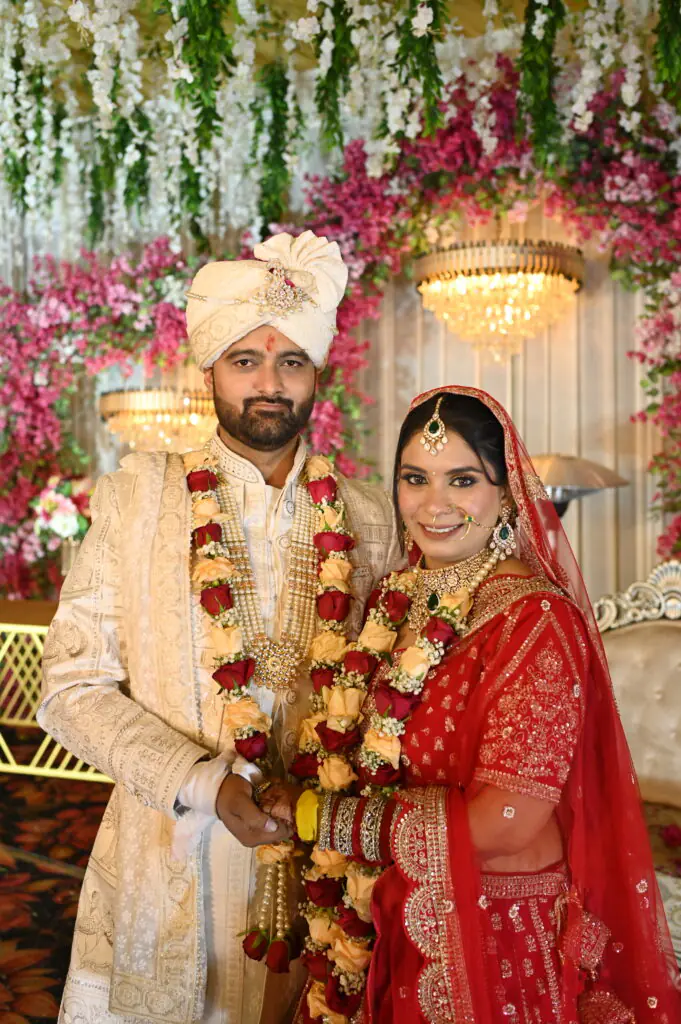
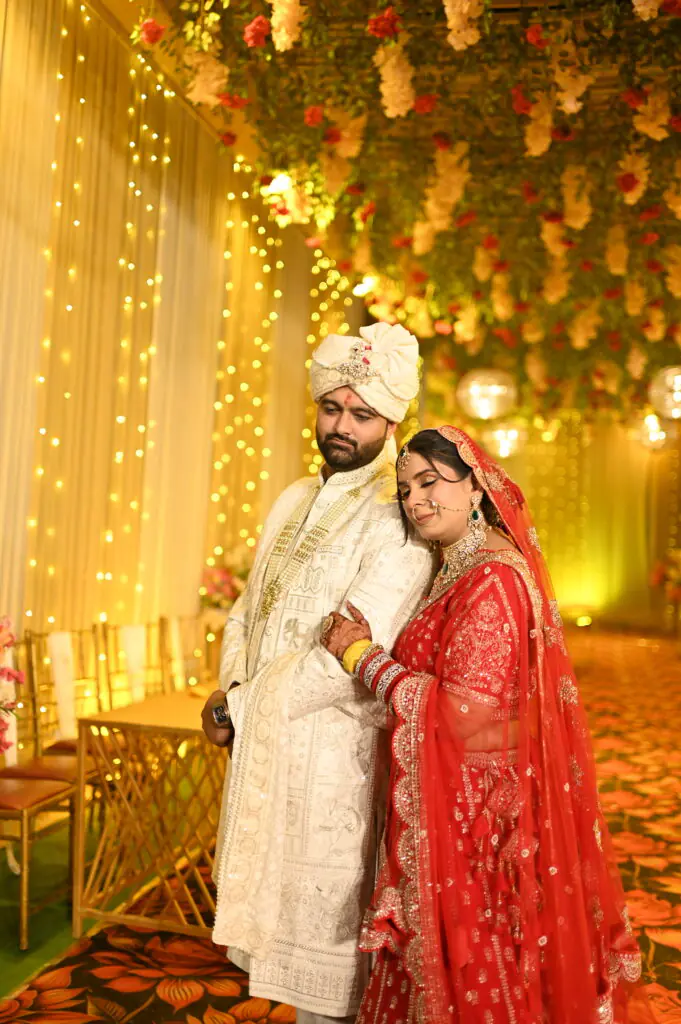
Traditional wedding photography is posed, planned and complete. The photographer directs people, makes sure faces are lit and sharp, and works through a list: every ritual, the couple with each side of the family, the stage photos, the group shots. It is the style your parents’ album was made in, and it is still the part families miss most when it is left out.
What it is good at:
- Making sure no ritual and no relative is missed.
- Stage photos with family, which grandparents will look at far more often than any reel.
- Clean, evenly lit frames that print well in an album.
Where it falls short: on its own it can feel stiff. Nobody remembers their wedding as a row of people standing still.
What is candid wedding photography?
Candid wedding photography means photographing people as they are, without asking them to pose. The photographer watches, anticipates and stays out of the way: your father wiping his eyes during the kanyadaan, your friends losing it at the sangeet, the moment the haldi turns into a fight. It is unscripted, so it depends on the photographer’s timing more than on directions.
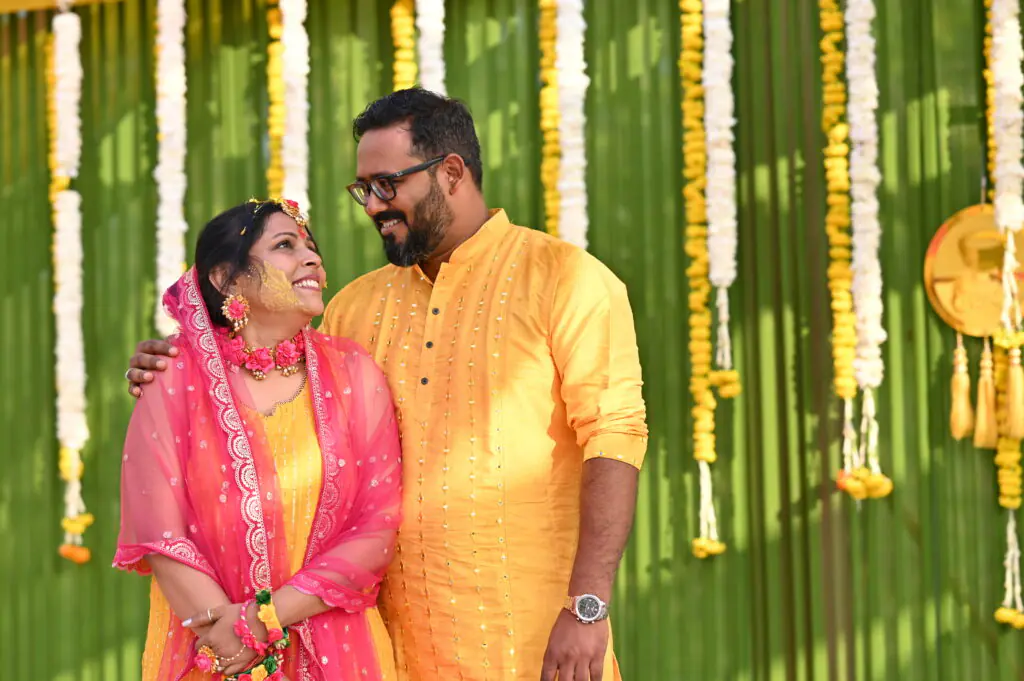
Candid works best at events with a lot of feeling and movement, such as haldi, mehendi, sangeet and vidaai. It needs a photographer who knows the rituals well enough to be in the right place before the moment arrives.
What is cinematic wedding photography and film?
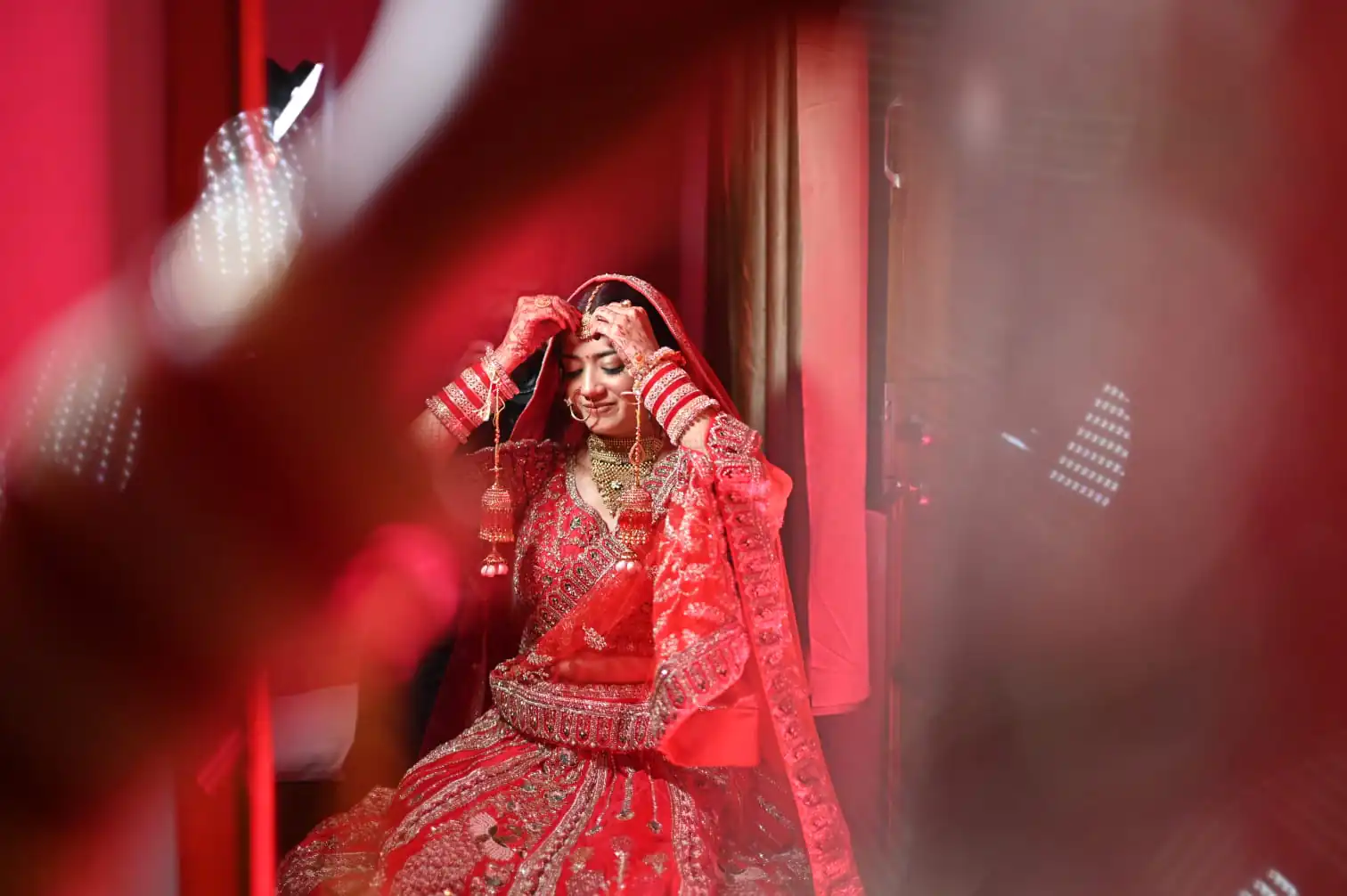
“Cinematic” describes a way of shooting and editing that borrows from film-making. In photos, that means chosen light (golden hour, fairy lights, a lit mandap), layers and depth, wider frames that show the place, and a consistent colour grade across the whole set. In video, it means planned camera movement, careful sound and an edit that tells a story instead of running through events in order.
Part of the “film look” in video is technical. Many cinematic wedding videographers shoot at 24 frames per second, the frame rate long associated with film, because it gives motion a film-like quality (Wikipedia, “24p”). Smooth stabilised movement, shallow depth of field and colour grading do the rest.
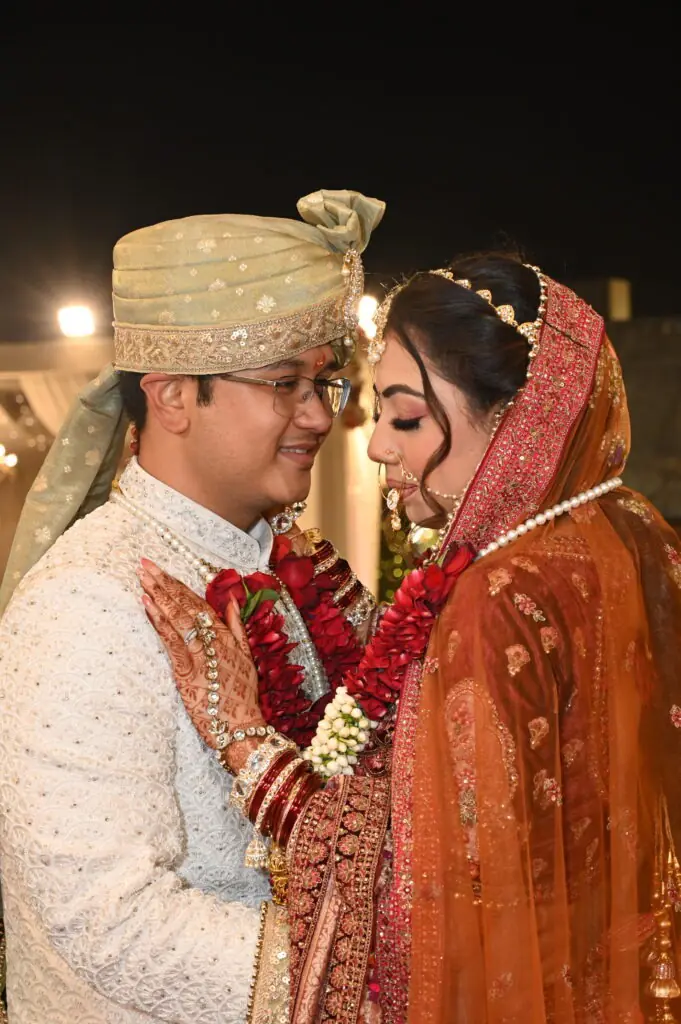
One thing worth knowing: cinematic is a style, not a replacement for coverage. A beautiful 3-minute film is no help if nobody photographed your grandmother at the pheras. The best results come when cinematic work sits on top of solid traditional and candid coverage.
How do the three styles compare side by side?
| Traditional | Candid | Cinematic | |
|---|---|---|---|
| How it is shot | Posed and directed | Unposed, observed | Real moments, with light, angle and movement chosen |
| Main strength | Completeness: every ritual and relative | Emotion and spontaneity | Mood and storytelling |
| Best for | Pheras, stage photos, family groups | Haldi, mehendi, sangeet, vidaai | Couple portraits, entries, the film |
| What you receive | Album photos of every ritual and family member | Natural, often unplanned moments | Graded photos, plus a film and short clips if video is booked |
| Risk if used alone | Feels stiff | Relatives can be missed | Beautiful but incomplete |
What do teaser, reel, highlight film and cinematic film mean?
Video terms are where most of the confusion lives. Different studios use them differently, which is why lengths should always be written into your booking. Here is how the terms are generally used, and where each one appears in our own packages:
| Deliverable | What it is | What it is for | In Magical Click packages* |
|---|---|---|---|
| Teaser | A short trailer of the wedding, often around a minute | Sharing quickly with friends and family | Diamond (with the cinematic film) |
| Reel | A vertical clip made for Instagram | Social media | Ask us; see our guide to wedding reels |
| Highlight film | The best moments of the day, edited to music | Watching again and again | Silver: highlight reel of 5–7 minutes |
| Cinematic film | A longer, story-led film with vows, speeches and quiet moments | The keepsake you watch on anniversaries | Gold: 10–12 minutes; Diamond: cinematic film + teaser |
| Full-length or traditional video | Longer, mostly unedited coverage of the rituals in order | A complete record for the family | Not listed in the packages; traditional videography is one of our services, so ask if your family wants it |
If drones are part of your plans, read our guide to flying a drone at a wedding in India first. Venue and airspace rules apply.
Which style should lead at each wedding event?
You don’t have to pick one style for the whole wedding. A good team changes approach as the day changes. This is how we usually balance it:
| Event | What should lead | Why |
|---|---|---|
| Haldi and mehendi | Candid | Laughter, mess and movement; posing kills the mood |
| Sangeet | Candid + cinematic video | Performances and reactions; stage lighting suits a film look |
| Baraat and entries | Cinematic + candid | Movement, music and crowds make strong film scenes |
| Varmala | Candid + traditional | It happens fast, and families want a clear frame of it |
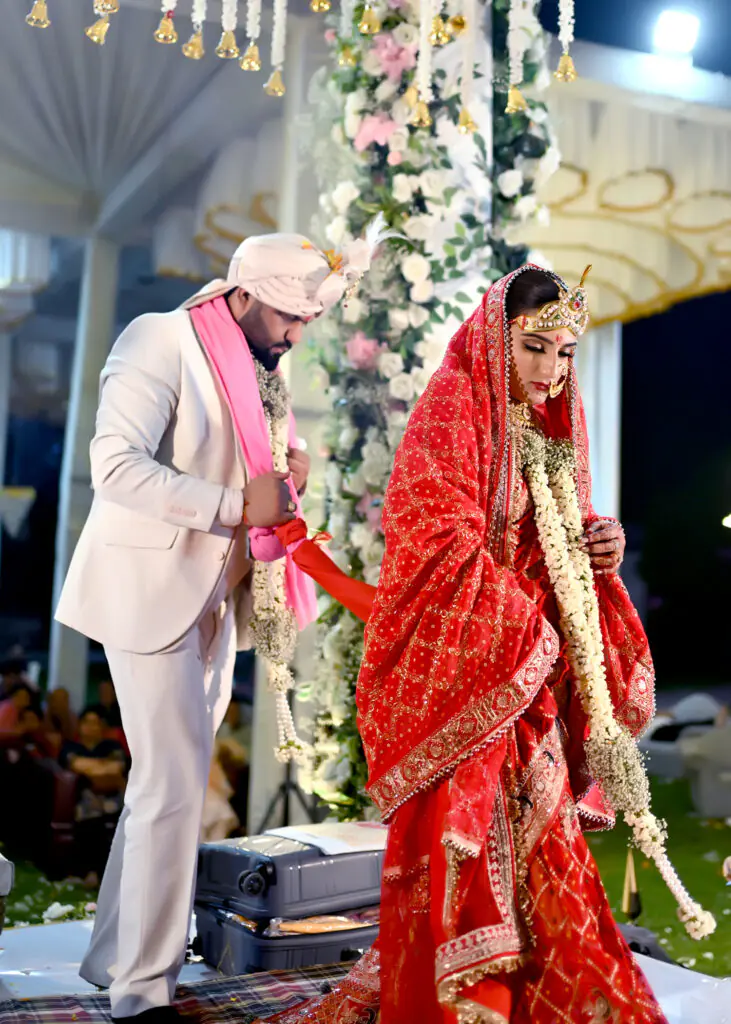
| Pheras and kanyadaan | Traditional + candid | Every ritual must be covered; emotions run highest here |
| Couple portraits | Cinematic | Time to use light and setting carefully |
| Reception stage | Traditional | Photos with every family group |
| Vidaai | Candid | Real tears; nobody should be directed |
Why does this matter for the November–December 2026 muhurats?
Weddings pause during Chaturmas and resume after Dev Uthani (Prabodhini) Ekadashi. Drik Panchang’s 2026 list for New Delhi shows the first marriage date on Saturday 21 November, the Dwadashi that follows the Ekadashi, and only eleven dates in all across November and December (Drik Panchang, “Hindu Marriage Dates 2026” (New Delhi)):
| Month | Marriage dates in 2026 (New Delhi) |
|---|---|
| November | 21 (Sat), 24 (Tue, late night), 25 (Wed), 26 (Thu) |
| December | 2 (Wed), 3 (Thu), 4 (Fri), 5 (Sat), 6 (Sun, early morning), 11 (Fri, from early morning), 12 (Sat) |
When a lot of families share a handful of dates, photographers and videographers book up fast. For a sense of scale: for the 2025 season, the traders’ body CAIT estimated about 46 lakh weddings and ₹6.5 lakh crore of wedding spending (ETV Bharat on the CAIT 2025 wedding-season estimate, 6 Nov 2025). As of 14 November 2026 we have not seen CAIT’s estimate for this season, so treat that as last year’s figure only.
In practice: if your date is one of these, settle the style question early, because it decides how many photographers and videographers you need, and that is what gets scarce.
What should you ask a studio before you book?
Whoever you book, these questions will save you from most surprises:
- How many photographers and videographers will be there, and who covers each side of the family?
- Which events get candid, traditional and cinematic coverage? Is that written down?
- Exactly how long are the teaser, highlight film and cinematic film? Is a full-length video included?
- Can we see a full wedding gallery and a full film from one wedding, not only the best clips?
- When will photos, films and the album be delivered?
- Will you fly a drone, and who handles the permissions?
- How many edited photos do we receive, and how will we choose the album photos?
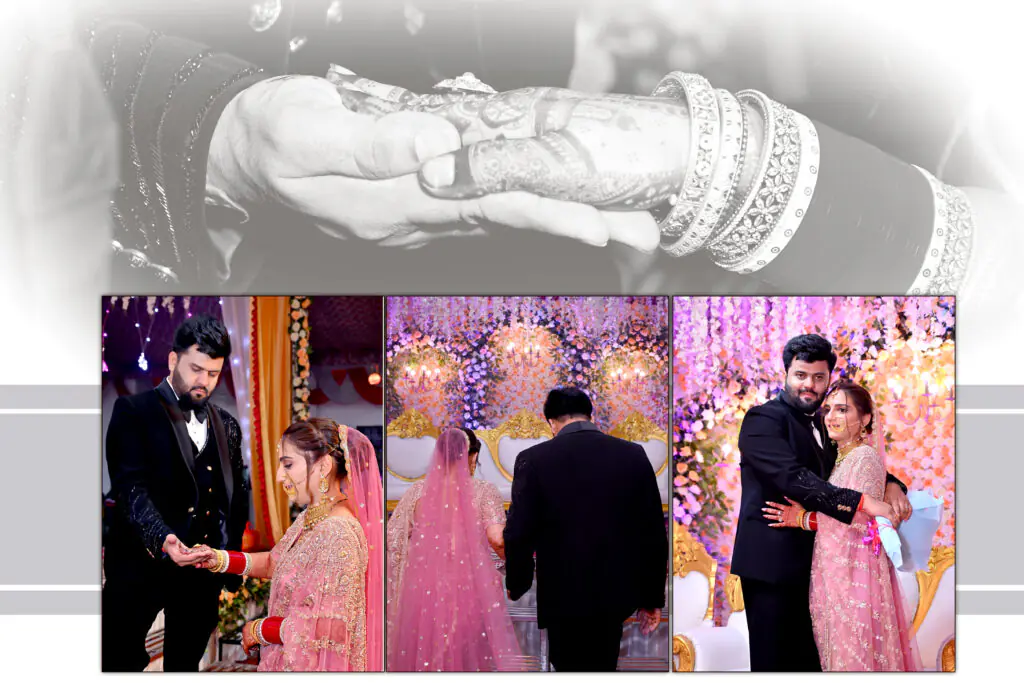
Choosing album photos is its own small project. Our guide on how to choose photos for your wedding album walks through it. If you want to see how we balance the three styles in our own work, our cinematic wedding films and our wedding photography packages show what each package includes.
Frequently asked questions
What is cinematic wedding photography?
It is a way of shooting and editing that makes your wedding look like frames from a film: deliberate light, depth, movement and a consistent colour grade, so the photos and video tell one story rather than list events. It is a style, not a separate service, and it usually sits on top of good candid and traditional coverage.
What is the difference between candid and cinematic wedding photography?
Candid photography catches real moments as they happen, without posing. Cinematic photography also cares about real emotion, but the photographer shapes the light, angle and setting more, and the edit has a filmic colour grade. A candid frame records a laugh; a cinematic frame records the same laugh with the evening lights behind you and the background falling softly out of focus.
Do we still need traditional photography if we book candid and cinematic?
For most Indian weddings, yes. Traditional coverage is what makes sure every ritual and every relative is photographed clearly, especially the stage photos with family. Candid and cinematic work add feeling; traditional work makes sure nobody is missing from the album.
What is the difference between a teaser, a highlight film and a cinematic film?
A teaser is a short trailer meant for sharing, usually around a minute. A highlight film is a few minutes long and shows the best moments of the day edited to music. A cinematic film is longer and tells the story of the wedding with more of the vows, speeches and quiet moments. Lengths vary by studio, so ask for exact durations in writing.
When are the wedding muhurats in November and December 2026?
Drik Panchang’s 2026 list for New Delhi shows marriage dates on 21, 24, 25 and 26 November and on 2, 3, 4, 5, 6, 11 and 12 December 2026. These dates use Panchang Shuddhi only, so confirm your exact muhurat with your family pandit.
Sources: Drik Panchang, “Hindu Marriage Dates 2026” (New Delhi); ETV Bharat on the CAIT 2025 wedding-season estimate, 6 Nov 2025; Wikipedia, “24p”. All accessed 14 November 2026. Package details are from our wedding photography packages as listed on 14 November 2026. Muhurat dates are for New Delhi; confirm yours locally.